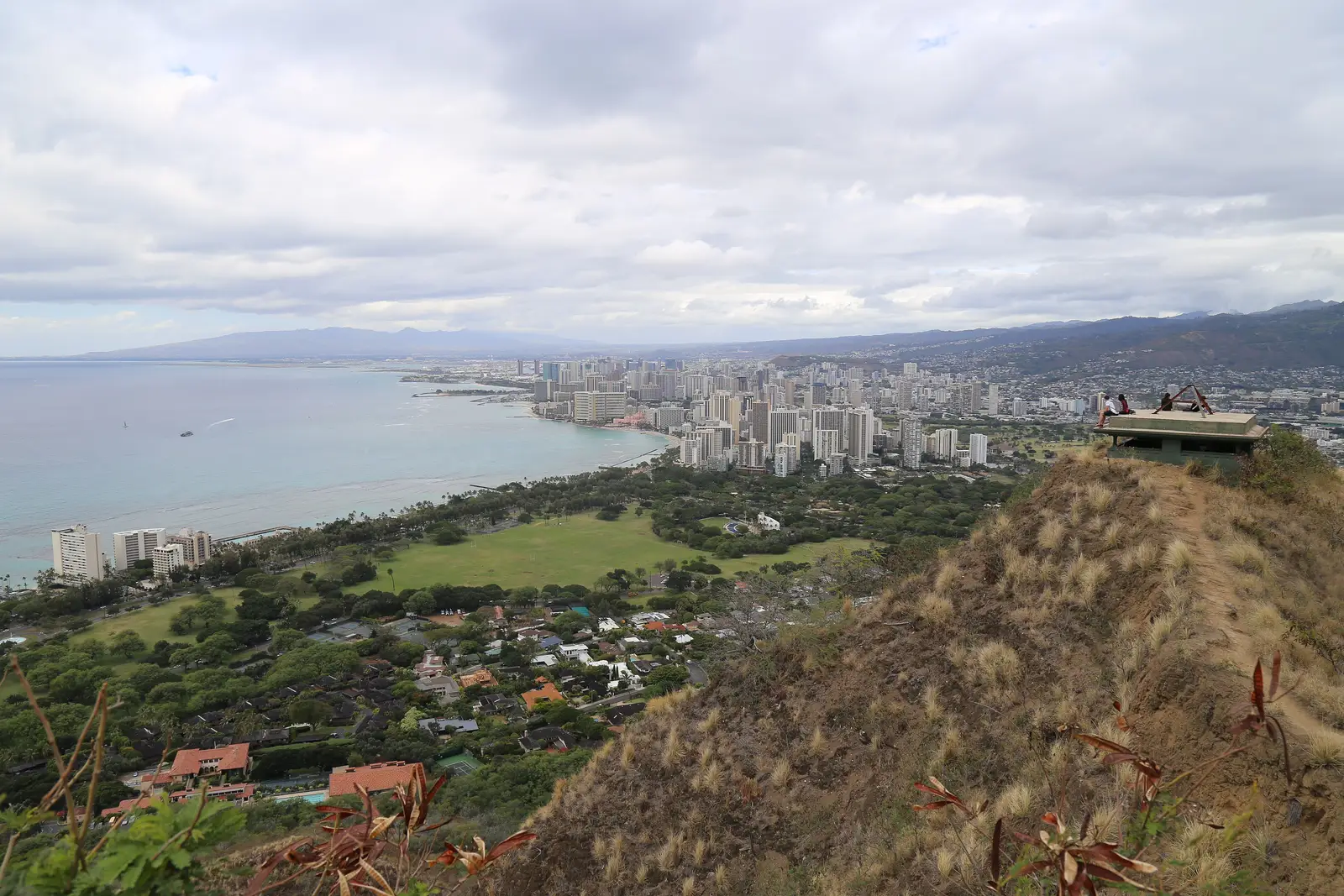
Hawaii is an unusual state to run the cost segregation numbers in. Home and condo prices are among the highest in the country, which means the building basis available to reclassify is often larger per door than almost anywhere else in the U.S. — but Hawaii is also one of roughly two dozen states that do not follow the federal government's 100% bonus depreciation rules, a group that has grown rather than shrunk in recent years as additional states (Oregon, effective for 2026, among the most recent) have decoupled. Under Hawaii Revised Statutes section 235-2.4(l) (numbered 235-2.4(m) before 2026), IRC section 168(k) bonus depreciation simply does not apply for Hawaii personal income tax purposes, so the accelerated first-year write-off a cost segregation study creates flows entirely to the federal return, not the state one. That distinction matters enormously for an investor's planning, and it is compounded by Hawaii's graduated income tax, which tops out at 11% — among the highest marginal rates in the nation — making every dollar of allowable federal deduction unusually valuable even though the state won't mirror it.
Apex Reserve Group, based in Irvine, California, prepares engineering-based cost segregation studies for real estate investors nationwide, including short-term rental and long-term rental owners throughout Hawaii. This page is general educational information, not tax or legal advice; every owner's basis, entity structure, and filing position is different, so confirm the specific numbers for your property with a qualified CPA or tax attorney licensed in Hawaii before filing.
Why Cost Segregation Pays Off in Hawaii
Hawaii is a bonus-depreciation decoupled state, and the mechanism is spelled out directly in statute. HRS section 235-2.4(l) (subsection (m) for 2025 and earlier years) provides that IRC sections 168(j), 168(k), and 168(m) — the bonus depreciation and related accelerated-expensing provisions — are not operative for Hawaii income tax purposes. In practice, that means an investor who claims the federal 100% bonus deduction on a newly reclassified 5-, 7-, or 15-year asset must add that bonus amount back on the Hawaii return and instead depreciate the same asset for state purposes on a separate schedule computed as if bonus depreciation never existed — using a second, Hawaii-only Form 4562 and regular MACRS recovery over the asset's normal class life. The federal and state depreciation schedules then diverge and slowly reconverge over the life of the asset as Hawaii's un-accelerated deductions catch up in later years.
This is not a reason to skip cost segregation in Hawaii — it is a reason to plan around it correctly. The engineering study still reclassifies the same components (carpet, cabinetry, decorative lighting, site improvements, certain electrical and plumbing runs tied to appliances) into shorter MACRS lives whether or not bonus applies, and Hawaii still allows standard accelerated MACRS depreciation on those shorter-lived assets — just spread across 5, 7, or 15 years rather than taken as a single first-year bonus deduction. Because Hawaii's own top personal income tax bracket reaches 11%, the state-level acceleration that does survive the addback is still worth pursuing, and the full, uncapped federal bonus deduction remains available against federal liability regardless of the state treatment.
Property taxes cut in the opposite direction from income taxes here, but the picture depends heavily on how a property is classified. Hawaii's statewide blended effective property tax rate — commonly cited around 0.27% to 0.29% of assessed value — is among the lowest of any state, but that blended figure is dominated by owner-occupied and long-term residential parcels. Counties tax short-term and vacation-rental-classified property on a separate, much higher schedule: the City and County of Honolulu's official real property tax rate sheet lists a Vacation Rental Tier 3 rate (applicable to higher-value parcels) of $12.20 per $1,000 of assessed value, or roughly 1.22% — several times the statewide blended figure — and Maui County applies its own elevated TVR-STRH (transient vacation rental / short-term rental home) classification well above the rate it charges owner-occupied homes. An investor evaluating carrying costs on a licensed short-term rental should budget against these STR-specific millage rates rather than the statewide blended average, which is part of why maximizing every other legitimate deduction — including cost segregation — matters even more for this property type.
How a Cost Segregation Study Works
Absent a study, the IRS default is to depreciate an entire residential rental building on a straight line over 27.5 years, or a commercial building over 39 years, with land value carved out and never depreciated at all. A cost segregation study is an engineering-based analysis — typically involving a site visit, construction-cost documentation, and IRS-recognized methodology — that identifies the portion of a property's basis attributable to components the tax code treats as personal property or land improvements: things like flooring, window treatments, cabinetry, specialty electrical, decorative fixtures, fencing, and paving. Those components can be moved out of the 27.5- or 39-year bucket and into 5-, 7-, or 15-year recovery periods instead, which dramatically compresses the depreciation timeline. On the federal return, the 2025 tax reconciliation law commonly known by the industry shorthand "OBBBA" (its short title was struck during Senate passage, so it carries no official name and is codified as Public Law 119-21), signed into law in July 2025, permanently restored 100% bonus depreciation for qualifying property acquired after January 19, 2025, meaning the entire reclassified 5-, 7-, and 15-year basis can generally be deducted federally in the year the property is placed in service, rather than depreciated gradually — a benefit Hawaii, as described above, does not mirror on its own return.
A Hawaii Cost Segregation Example
For illustration only — your results depend on your property and tax situation, and this is not a projection of actual savings.
Suppose an investor buys a hotel-zoned, licensed short-term rental condo in Wailea, Maui for $1,400,000 in 2026. After allocating roughly 30% of the purchase price to land ($420,000), the depreciable building basis is $980,000. A cost segregation study might reclassify around 25-30% of that building basis — roughly $270,000 — into 5-, 7-, and 15-year property covering items such as furniture, flooring, appliances, decorative lighting, and exterior improvements like landscaping and paving. On the federal return, with 100% bonus depreciation available for property acquired after January 19, 2025, that entire $270,000 could potentially be deducted in year one against federal taxable income. On the Hawaii return, the same $270,000 in reclassified assets would instead depreciate under standard MACRS across their 5-, 7-, and 15-year lives — still faster than the 27.5-year default, just not as an immediate lump sum. Actual allocations, percentages, and eligibility depend on the specific property, its use, and the owner's tax position.
Already Own Your Hawaii Property? The Look-Back Study
Investors don't have to have purchased in the current tax year to benefit. A look-back cost segregation study can be performed on Hawaii property acquired or substantially renovated in prior years, with the accumulated difference between what was actually depreciated and what could have been depreciated under a proper component-based schedule captured through IRS Form 3115, Application for Change in Accounting Method. That change is reported as a one-time Section 481(a) adjustment in the current tax year — there's no need to amend prior-year federal or Hawaii returns, and no statute-of-limitations issue with reopening old filings. Given that Hawaii already requires investors to track a separate, non-bonus depreciation schedule for state purposes, a look-back study is also a useful moment to correct or formalize that Hawaii-specific schedule going forward with the help of a CPA familiar with the state's addback rules.
Who Should Consider Cost Segregation in Hawaii
- Short-term and vacation rental owners operating in Hawaii's legal STR markets, such as the resort core of Waikiki on Oahu, hotel-zoned and resort-zoned condo-hotel properties in Wailea on Maui, resort-zoned condos in Poipu and Princeville on Kauai, and permitted rentals around Kailua-Kona and the Waikoloa Beach Resort area on Hawaii Island — noting that Maui County's Bill 9 (signed into law December 15, 2025) phases out roughly 6,200 apartment-zoned, Minatoya-list short-term rentals concentrated in West Maui (including Kaanapali, legal only through December 31, 2028) and South Maui (including Kihei, legal only through December 31, 2030), so any Kihei- or Kaanapali-area unit should be confirmed as hotel-zoned, not Minatoya-list, before treating it as a durable long-horizon STR cost segregation candidate
- Long-term rental property owners across all four counties looking to offset Hawaii's steep 8.25% to 11% top marginal income tax brackets with accelerated federal deductions
- Investors who recently purchased, built, or substantially renovated a Hawaii rental property — noting that owners of older apartment-zoned or Minatoya-list units on Maui face an enforced short-term-rental phase-out under Bill 9, not a path to compliance, with STR legality ending December 31, 2028 in West Maui and December 31, 2030 in South Maui absent a rezoning exemption, so cost segregation planning for those units should account for the shortened legal STR horizon
- High-income owners evaluating the short-term rental material participation strategy, where an average guest stay of seven days or less and material participation can allow rental losses to offset active W-2 or business income
- Buyers weighing a Hawaii acquisition against mainland alternatives, who want a realistic side-by-side comparison of federal-only versus federal-and-state depreciation benefits before closing