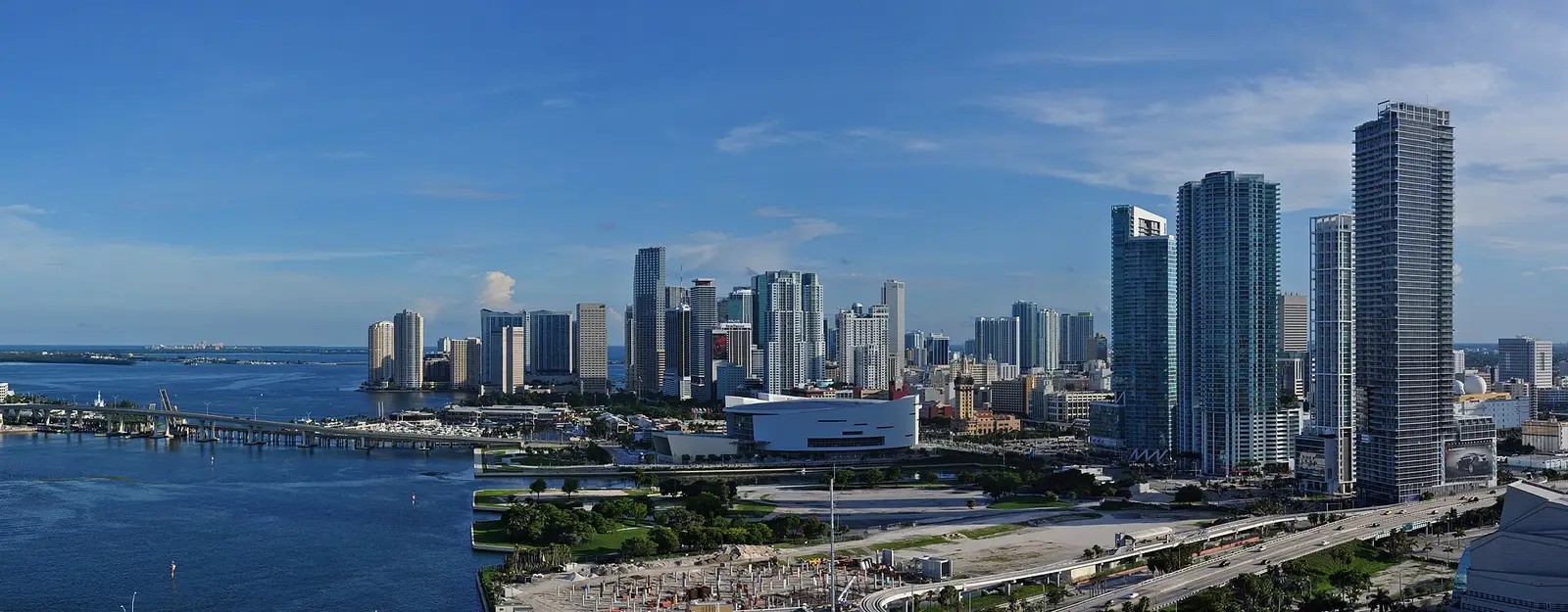
Florida has no state individual income tax, which means the federal deduction a cost segregation study generates isn't diluted or complicated by a parallel state calculation for the vast majority of rental owners. That matters because Florida is also one of the country's largest short-term rental markets: Disney-area vacation homes around Kissimmee and Orlando, high-rise and beachfront units in Miami and South Beach, the Gulf Coast corridor running from Destin and 30A down through Naples and Sarasota, the Florida Keys, and Panama City Beach. Add in hurricane-driven property insurance costs that run well above the national average, and Florida investors have real reasons to make sure they're capturing every available federal deduction rather than leaving depreciation on the table for 27.5 or 39 years.
Apex Reserve Group, based in Irvine, California, provides engineering-based cost segregation studies for real estate investors nationwide, including throughout Florida. This page is general educational information, not tax or legal advice — every property and ownership structure is different, and you should confirm how any of this applies to you with a qualified CPA or tax advisor before making decisions.
Why Cost Segregation Pays Off in Florida
Florida has no state individual income tax, so for the overwhelming majority of Florida rental owners — individuals, single-member LLCs, and multi-member partnerships — there is no state return where accelerated depreciation from a cost segregation study needs to be added back, limited, or spread out differently than it is federally. The federal deduction simply applies.
There is one nuance worth stating precisely, because it's easy to get wrong: Florida's separate 5.5% corporate income tax has decoupled from federal bonus depreciation since 2008, and 2026 legislation (HB 7031) reaffirmed that by keeping Florida on the pre-OBBBA version of Section 168(k). A C-corporation doing business in Florida must add back its Section 168(k) bonus depreciation and recover that amount in seven equal annual installments on its Florida corporate return, and the OBBBA's 100% rate is not recognized for Florida purposes. In practice, this rarely touches short-term rental or residential investors, because almost none of them hold property inside a C-corporation — and because Florida has no personal income tax at all, there is no equivalent add-back for the LLCs, partnerships, and individual owners who make up the bulk of the state's Airbnb and vacation-rental market. For most readers of this page, the conformity question that looms so large in states like California simply doesn't come up.
Property taxes add a second layer to the calculus. Florida's statewide effective property tax rate runs around 0.8%, modestly below the current national average of roughly 0.9%, though it varies widely by county — Miami-Dade owners generally pay more than owners in inland or Panhandle counties — and the Save Our Homes 3% assessment cap that shelters homesteaded primary residences does not apply to non-owner-occupied rental or short-term rental property. Insurance is the bigger wildcard: hurricane exposure keeps Florida property insurance premiums well above the national average, and many investors pay several thousand dollars a year more than an equivalent property elsewhere would cost to insure. That's a real carrying-cost headwind, and it's exactly the kind of cost that a large first-year depreciation deduction helps offset by improving after-tax cash flow in the years that matter most.
Finally, Florida's short-term-rental inventory is both enormous and geographically spread out — Kissimmee and greater Orlando's Disney-area vacation-home market, Miami and South Beach, the Gulf Coast corridor from Destin and 30A through Naples and Sarasota, the Florida Keys, and Panama City Beach. Furnished vacation rentals in these markets typically carry more furniture, appliances, pool and spa equipment, and outdoor living components per dollar of purchase price than a typical long-term rental, which often means a larger share of the depreciable basis is eligible for reclassification into shorter recovery periods.
How a Cost Segregation Study Works
The IRS default is to depreciate a residential rental building over 27.5 years and a nonresidential building over 39 years, one straight-line dollar at a time. A cost segregation study is an engineering-based analysis — built on site inspections, construction and cost records, and IRS-recognized methodology — that walks through the property and identifies components that qualify for much shorter recovery periods: flooring, cabinetry, specialty electrical and plumbing, certain appliances, and site work such as landscaping, irrigation, fencing, and paved surfaces. Those components get reassigned into 5-, 7-, or 15-year property classes instead of riding the building's full 27.5- or 39-year schedule.
Under current federal law, that reclassification matters enormously. The One Big Beautiful Bill Act (OBBBA), signed in July 2025, permanently restored 100% bonus depreciation for qualified property that is both acquired and placed in service after January 19, 2025 — reversing the phase-down toward 40% and lower that had been scheduled under prior law. Acquisition date generally means the date of a written binding contract, so a property placed in service after January 19, 2025 but bought under a contract signed on or before that date typically doesn't get the full 100% rate and instead stays on the prior phase-down schedule — a distinction worth confirming with your CPA if your purchase contract predates that cutoff. Property that clears both dates and is reclassified into a 5-, 7-, or 15-year class through a cost segregation study now qualifies to be written off in full in the year it's placed in service, rather than spread across the building's full depreciation life.
A Florida Cost Segregation Example
Here is a simplified, hypothetical example — for illustration only. Your results depend on your specific property and tax situation, and you should confirm any numbers with your CPA before relying on them.
Suppose an investor buys a furnished vacation-rental home near Kissimmee for $600,000, with $450,000 allocated to the depreciable building after backing out land value. Under standard straight-line depreciation, a residential building with that basis produces roughly $16,000 a year in deductions.
A cost segregation study might reclassify, say, $110,000 of that basis into 5-, 7-, and 15-year property — furniture, appliances, pool and deck components, landscaping, and similar items. Under 100% bonus depreciation, that $110,000 could be deducted in full in year one, on top of ordinary depreciation on the remaining building basis. At an illustrative 30% combined federal rate, that works out to roughly $33,000 in first-year tax savings — again, illustrative, not a promise of what any specific property will produce.
Because this investor owns the property individually or through an LLC or partnership rather than a Florida C-corporation, and Florida has no personal income tax, none of that federal deduction needs to be added back on a state return — there simply isn't one for this income. If the same property were instead held inside a Florida C-corporation, the corporation would need to add the bonus depreciation back on its Florida corporate return and recover it over seven equal annual installments instead — a difference worth flagging to your tax advisor if you use a corporate structure.
Already Own Your Florida Property? The Look-Back Study
If you already own Florida rental property and have been depreciating it the standard way since you bought it, you haven't missed your window. A look-back study lets a cost segregation firm analyze the property as if the study had been completed in the year it was placed in service, then true up the difference through IRS Form 3115, a change in accounting method that produces a one-time Section 481(a) adjustment. That catch-up deduction is claimed on your current-year return — you do not need to amend any prior returns to capture it.
Who Should Consider Cost Segregation in Florida
Cost segregation is worth evaluating for a range of Florida property owners:
- Short-term rental and Airbnb hosts in Kissimmee and greater Orlando, Miami and South Beach, the Destin/30A corridor, Naples, Sarasota, the Florida Keys, and Panama City Beach
- Long-term residential and commercial rental owners looking to accelerate deductions rather than wait out a 27.5- or 39-year schedule
- Investors who recently purchased, built, or substantially renovated a Florida property
- Owners who have held a property for several years and never had a cost segregation study done — the look-back approach above can still capture that value
- High-income W-2 earners or business owners whose short-term rental qualifies for non-passive treatment under the material-participation rules, letting depreciation losses offset active income rather than sitting suspended against future passive gains
If you're a short-term rental owner, our guide to short-term rental cost segregation walks through the 39-year default schedule, the W-2 income offset strategy, and a full worked example.